BC Minimum Wage Is Now $18.25: What Employers Should Confirm
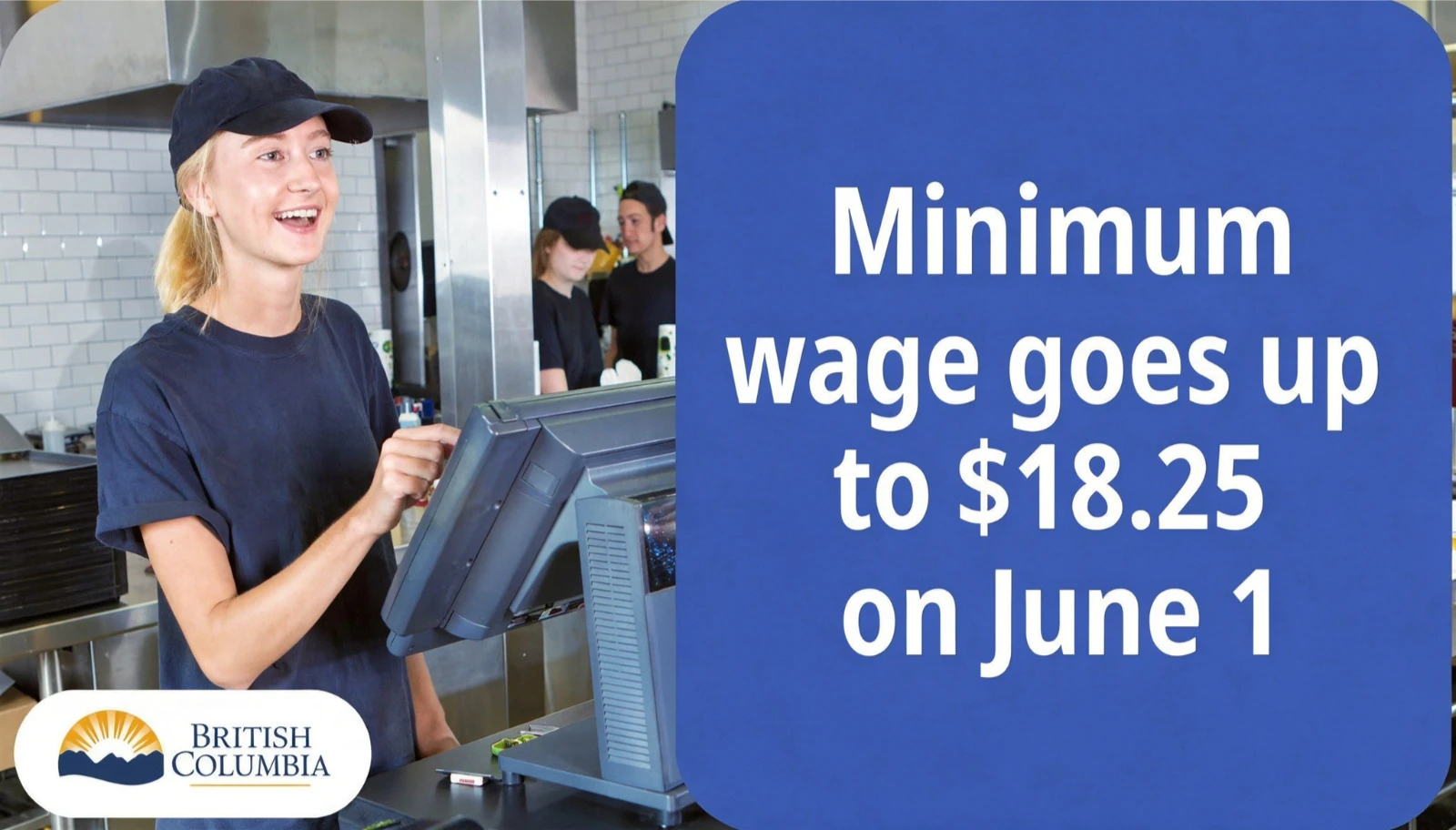
On June 1, 2026, BC's general minimum wage increased from $17.85 to $18.25 per hour. That is a $0.40 increase, or about 2.24%. The province based the amount on its reported average inflation rate for 2025, which came in at just over 2.1%.
If you employ anyone at or near minimum wage, or your employment agreements, wage scales, or payroll settings reference minimum wage, this is a good time to confirm that your records were updated correctly. If everything was handled in June, this article is a quick check. If it was not, there is still time to fix it cleanly.
What changed on June 1, 2026
The increase was not a proposal. In 2024, BC tied annual minimum wage increases to the previous year's inflation rate. That means the adjustment happens automatically each June without a separate decision.
The June 1 increase applied to:
The general minimum wage for employees covered by BC's Employment Standards Act, unless a specialized rate or exemption applies
Resident caretakers
Live-in home support workers
Live-in camp leaders
App-based ride-hailing and delivery workers, whose minimum rose to $21.89 per hour of engaged time
One group follows a different timeline. Minimum piece rates for hand-harvested crops increase by the same percentage on December 31, 2026, not June 1.
The official details are in the BC government news release. Keep in mind that not every worker in BC is governed by the provincial general minimum wage. Federally regulated workplaces follow different rules, and some roles have statutory exclusions.
Why this matters even if you pay above minimum wage
Many business owners assume a minimum wage change does not affect them because their rates are already higher. Often that is true for the mandatory part. The indirect effects are where things get missed.
Wage compression. If experienced staff earn $19 or $20 per hour and a new hire now starts at $18.25, the gap between roles shrinks. That can create retention and morale issues if the scale above minimum is never adjusted.
Contract and policy language. Some employment agreements or HR policies reference "minimum wage" as a base for probationary rates, shift premiums, or other calculations. When the base moves, those figures move with it.
Payroll software settings. Some payroll systems have a minimum wage floor built into rate validation. Most cloud platforms update this automatically, but it is worth confirming rather than assuming.
A compliance check for employers
The increase has been in effect for over three months. If you have not reviewed your setup since June, here is a practical check:
Review pay rates from June 1 onward. Any employee who was earning between $17.85 and $18.25 should have moved to at least $18.25 for hours worked on or after June 1. If a rate was missed, calculate the shortfall and pay it out with a clear note in your records.
Confirm your payroll system reflects the new rate. Check the setting itself, not just a recent pay stub.
Look at your wage scale. Decide whether rates above minimum need adjusting to keep fair gaps between roles.
Update job postings and offer templates. Anything still showing a rate below $18.25 should be revised.
Confirm the cost is in your budget. For a full-time minimum wage employee working 40 hours per week, the increase adds roughly $16 per week, or about $832 per year in direct wages, before employer contributions.
From experience, when payroll runs on clean records and a consistent monthly routine, an update like this is a small task. When payroll has been running loosely, a rate change tends to surface other gaps at the same time. Either way, catching it now is easier than explaining it later. If a shortfall is discovered, it is generally better to correct it promptly and document what was done.
For a broader review of what to keep in order, our payroll compliance checklist for BC businesses walks through the recurring items.
How this connects to broader payroll compliance
A minimum wage change is one input. Several other payroll items respond to it, and they tend to stack:
CPP and EI. Higher wages normally increase contributions, up to the annual maximums set by the CRA. The current figures are published on the CRA's CPP contribution rates and EI premium rates pages.
Employer Health Tax. This only comes into play when total BC remuneration approaches or exceeds the exemption threshold, which is generally $1 million for regular employers. Most small businesses are well below that, but growing teams should keep an eye on it. The province's EHT overview explains how it works.
WorkSafeBC. Premiums are based on assessable payroll, so higher wages generally raise the base. Earnings are subject to a per-worker maximum. See WorkSafeBC's payroll reporting rules.
Vacation pay. Because it is calculated as a percentage of wages, the added wages flow through to vacation accruals.
None of these is complicated on its own. The value comes from reconciling payroll to your books every month so small shifts are caught before they become year-end surprises. That is the approach we take with bookkeeping clients in Mission. It also pairs well with the habits described in our article on preventing common payroll mistakes.
BC's minimum wage in context
As of September 2026, BC has the highest general minimum wage among Canada's provinces:
BC: $18.25, effective June 1, 2026
Ontario: $17.60, increasing to $17.95 on October 1, 2026 (Ontario government announcement)
Alberta: $15.00 for most employees (Alberta minimum wage rules)
Nunavut: $20.17, effective September 1, 2026, the highest among all provinces and territories (Government of Nunavut announcement)
Since 2017, BC has moved from near the bottom to the top among provinces. Automatic inflation-based increases give both workers and employers a predictable pattern. That is generally easier to plan around than the old approach, where the rate sat frozen for years and then jumped.
If you want a second set of eyes
If you are not sure whether your payroll setup reflects the June change, or you would like someone to review your wage structure and compliance items in one pass, FTF Accounting Inc. can help. We are a full-service CPA firm in Mission, BC, and payroll compliance is something we handle regularly for Fraser Valley businesses.
You can read more about our small business accounting services or get in touch when it suits you.
Frequently asked questions
When did the BC minimum wage increase take effect?
June 1, 2026. The general minimum wage increased from $17.85 to $18.25 per hour.
How much was the 2026 increase?
$0.40 per hour, or about 2.24%. The province based it on its reported 2025 average inflation rate of just over 2.1%.
Does the increase apply to all workers?
It applies to the general minimum wage and most specialized rates, including resident caretakers, live-in home support workers, live-in camp leaders, and app-based ride-hailing and delivery workers. Minimum piece rates for hand-harvested crops increase on December 31, 2026 instead. Federally regulated workplaces and certain excluded roles follow different rules.
Do I need to update my payroll system?
Yes, if it has not already been done. Confirm the $18.25 rate is in place and that no pay periods after June 1 were processed at the old rate. Most cloud platforms update automatically, but it is still worth checking.
What is the cost impact for employers?
For a full-time employee at minimum wage working 40 hours per week, the increase adds roughly $16 per week or about $832 per year in direct wages, before employer contributions like CPP, EI, vacation pay, and WorkSafeBC premiums.